In a pop culture dominated by reboots, sequels, AI and a pessimistic outlook for the theatrical industry as a whole, these 10 movies have renewed my hope for cinema.
#10 It Was Just An Accident
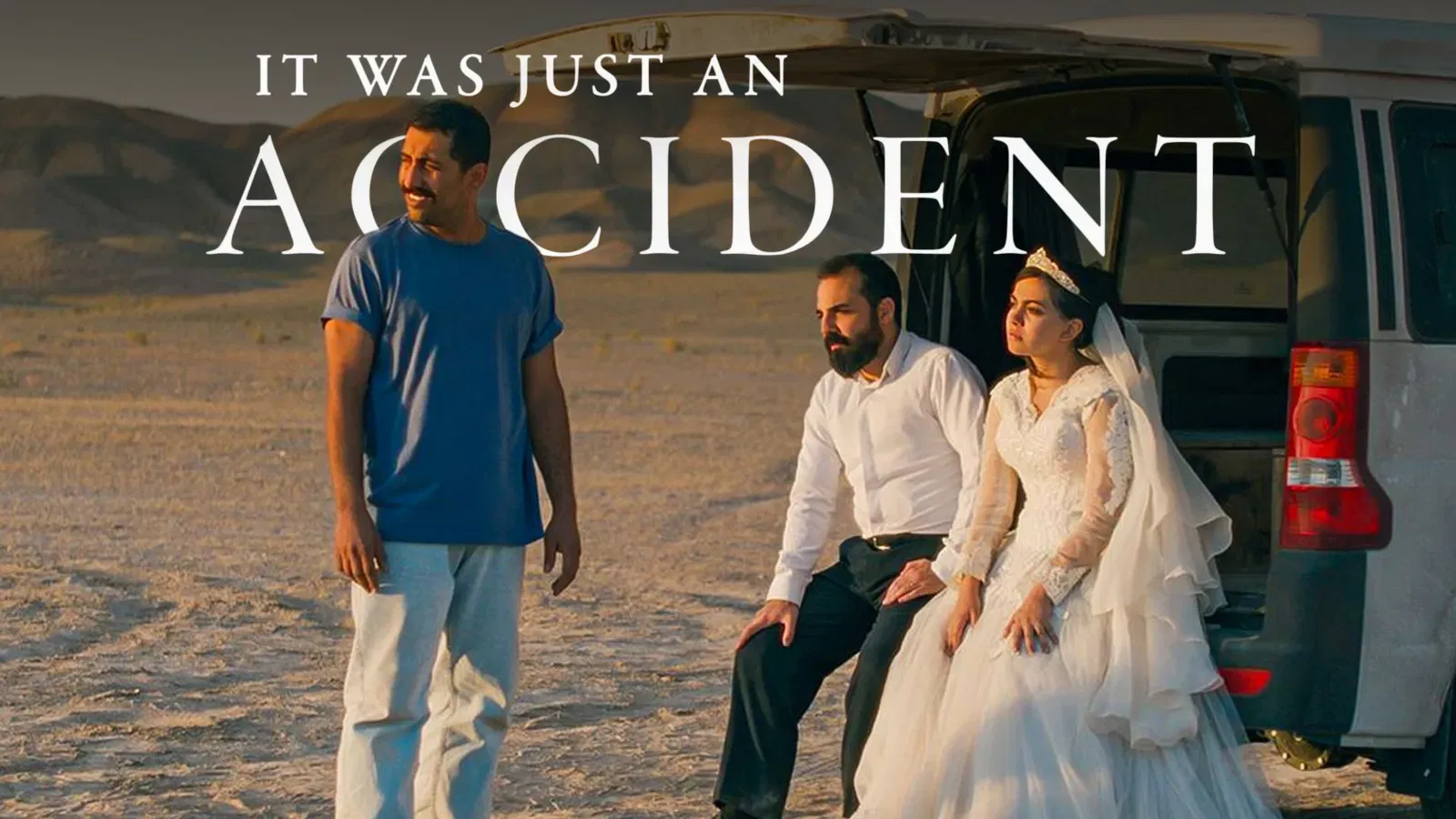
First up on this list is an entry from Iranian filmmaker Jafar Panahi. As with many films I've been watching lately, it's the post-viewing research that has enhanced my experience with this film. Some podcasts which I'll reference later, illuminated valuable backstory that made me appreciate just how much of a triumph it is that this movie ever even got made. Suffice to say, Panahi experienced significant duress shooting while under the watchful eye of the current "Government of Islamic Republic of Iran". This obviously led to constraints during production leaving an indelible mark on the final output.
"It Was Just An Accident" is a tight 1h 45min thriller, profiling the life of mechanic Vahid, who through sheer-chance, encounters a man he suspects has inextricably wronged him previously in their lives. The movie oscillates between wonderfully crafted comedic beats and introspective laments on the aftermath of authoritarian regimes. Most importantly, the filmmaker gives a voice to the living victims that these regimes leave behind and how these people choose to move forward with their lives.
There are many reasons why I feel this movie has stuck in my head, specifically the current political unrest happening in Iran today. In this vein, the film can serve as a primer for anybody interested in learning more about origins of the current political environment today.
I can't end this commentary without acknowledging the last 30 minutes of the film which is a Tour-De-Force by any account. Despite some seemingly treacherous shooting conditions (see the recommended podcast below) the final shot is will leave an undeniable stamp on your psyche for weeks to come.
Where to Watch: Available to Stream: Video on Demand (Youtube, Amazon Prime, Apple TV etc.)
Compare and Contrast With: 'It Was Just an Accident' and What it Means to Truly Confess' podcast by 'Beyond the Frame'. Hearing this conversation really helped me take meaning from the film and think about how its themes play out in my own life. Jump to 24:07 for the relevant timestamp.
#9 Train Dreams
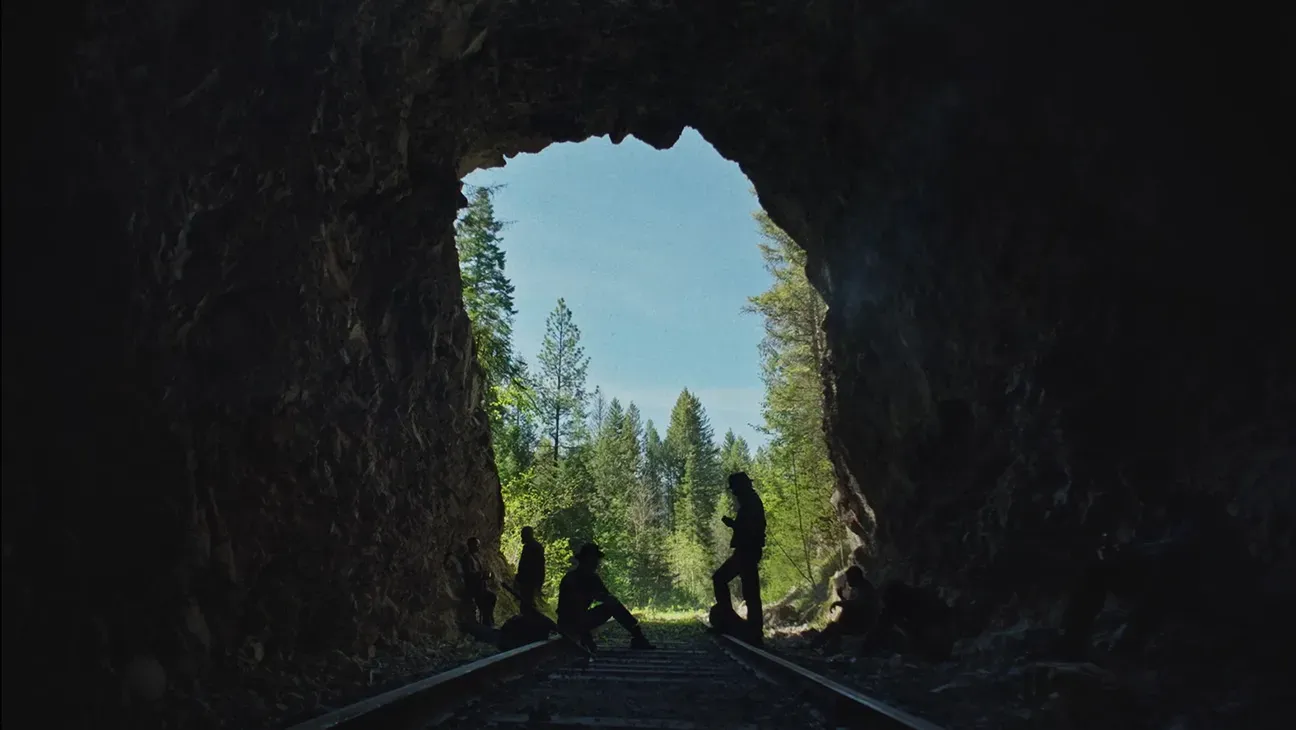
Train Dreams directed by Clint Bentley and starring Joel Edgerton is an early 20th century period drama following the life of Robert Grainier, a logger and railroad construction worker trying to find his way in a world experiencing drastic changes technologically, culturally and socially.
From the outset, Bentley and his cinematographer Adolpho Veloso captured my attention with mesmerizing, expansive shots of the Pacific-Northwest redwoods, wrapped in the lush narration of Bill Patton that left me feeling like I'd be in good hands for the remainder of my time seated. These choices and artistic flourishes masterfully transported me to a very specific time in American history and it is with this backdrop where the movie really kicks into another gear through the second and third acts.
Amongst the many themes that this movie is in conversation with, the transitory nature of time is one that has been ruminating in my head since my first watch. Throughout the story, we follow Robert as his livelihood is displaced by a new era of machinery-enabled logging that renders his manual labor redundant. The film opens with a massive set piece showing the construction of a railway bridge, lauded by the foreman as a true benchmark of human ingenuity and a legacy that will withstand long after they've all passed. It is no coincidence that we're later given a shot of Robert traveling by train, whilst in the background looms a brooding overpass being traversed by multiple motorized vehicles and in that moment we are left questioning, what does legacy even mean in this era of constant technical advancements?
Ultimately my main takeaway from the film is that time is transient and when we try to dispel these lofty ideas of "legacy" and how we'll be remembered, there is solace in knowing that one has lived at all. The experience is enough and when we step back and appreciate the marvel of life one day at a time, it can be freeing.
Where to Watch: Netflix
Compare and Contrast With: The movie is based on the novella of the same name written by Denis Johnson. Full disclosure I've not read the book but have heard good things and understand that it does depict the main protagonist from a different perspective than how he is portrayed in the movie.
#8 F1
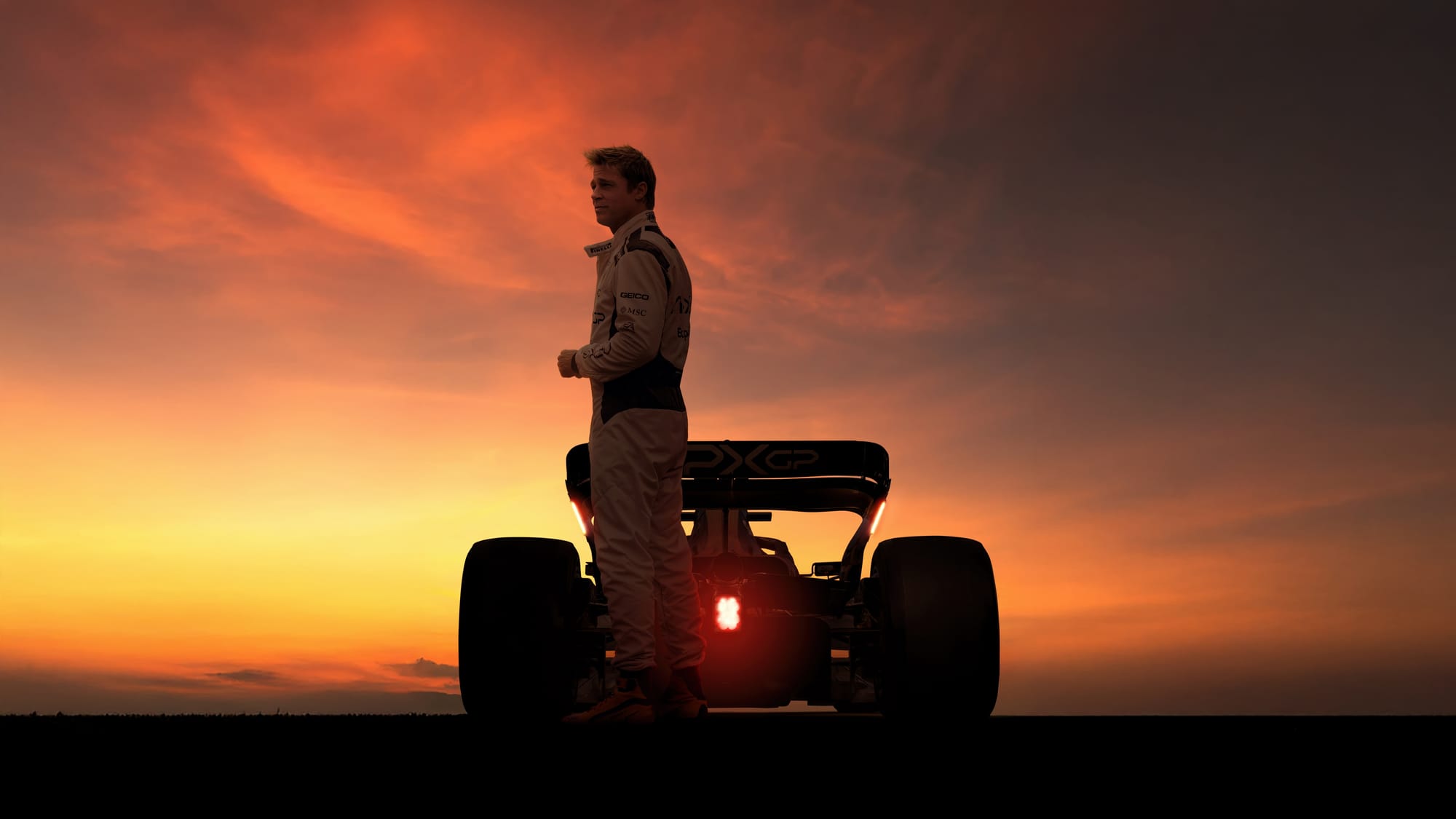
Four years on from Top Gun: Maverick almost single-handedly resuscitated the post-COVID box office, John Krasinski has airdropped in to deliver his next-high octane picture, F1. This time, we trade fighter jets for Formula 1 supercars as we follow the tale of Sonny Hayes (Brad Pitt), longtime motorsport journeyman who is enlisted by executive Rubén Cervantes (Javier Bardem) as a last resort to revive his faltering APX GP Formula 1 team.
Brad Pitt's casting is inspired and while some parts of the picture can strain credulity, I'm left giving the film the benefit of the doubt so I can stay on this journey with him. Hans Zimmer is brought in for the score and the aptly titled "F1" track from the movie soundtrack that is a marauding, synth-laden blockbuster truly giving me goosebumps experiencing it in Imax. Kerry Condon and Damson Idris (currently hotly tipped to be the next "Black Panther") round out the cast and both deliver memorable turns.
While I enjoyed the spectacle of Top Gun: Maverick, the world of fighter pilots just wasn't a beat that I ever felt that I could truly sink my teeth into. To me, it really felt that using the sauce of the Maverick formula while infusing the Formula 1 aspect, unlocked the grandeur of Krasinski's filmmaking for me. This movie is the new benchmark for any future racing sequences put to film. Apple even supposedly made new cameras and rigs to shoot some of the racing scenes.
Where to Watch: Apple TV
Compare and Contrast With: The song "F1" by Hans Zimmer.
#7 28 Years Later
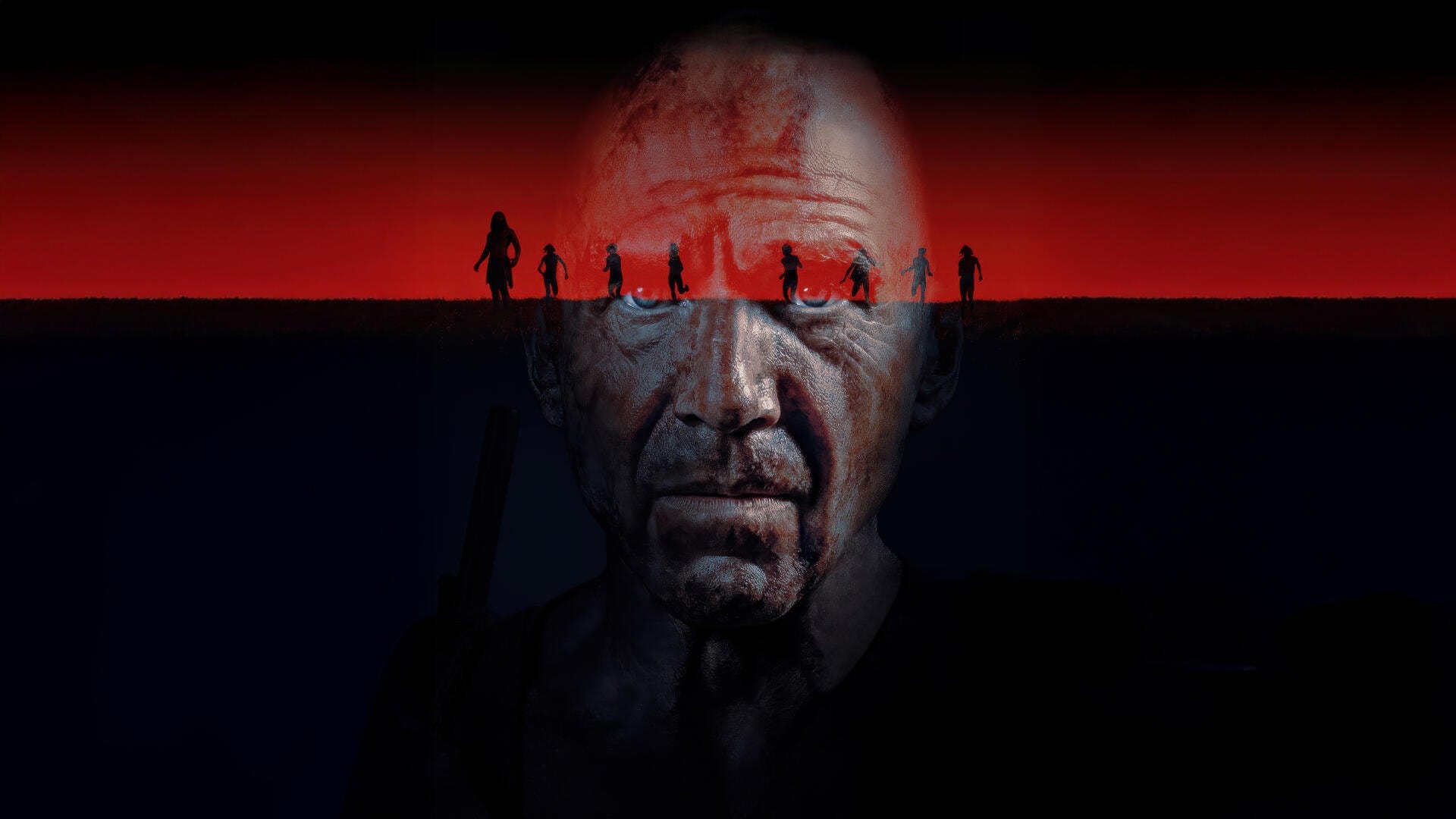
The "28 Years" franchise is one that I've held near and dear to my heart over the years. Reminiscing back to an early age, I can probably credit the OG "28 Days Later" as my first legitimate foray into the Horror genre. The final set-piece against the iconic "In the House - In a Heartbeat" composed by John Murphy, cemented Cillian Murphy as one of the titans of my early cinephile days; an accolade he'd do nothing but solidify as the years went on (see Red Eye, Batman, Peaky Blinders, The Wind that Shakes the Barley for more examples)
This film does something I have never seen in the "Zombie" genre up to now. While covering some of the familiar beats of the originals, Boyle and Garland shake it up by peeling the onion back on how the infected horde have "evolved", adding another level of depth to the world already established in the first movie.
It's what they do through the final acts of this story that fascinated me. One triumph of the original that places it in a class of its own is its ability to get the viewer truly invested in the protagonists of the story. This time out, Boyle chooses to lean into the emotional beats laid in the prequel, exploring the mother-son relationship and he really lands that arc skillfully. It's the empathy for the zombies themselves that really deserves a shoutout and sets the movie apart from most of its contemporaries.
There are kernels of this idea in the original, as the army in 28 Days Later brutally chain an 'infected' as they are studied this time out. Here however, Boyle takes that kernel and through a masterful performance by Ralph Fiennes, is able to mine even more emotional currency for the poor infected.
Where to Watch: Netflix.
Compare and Contrast With: The sequel, 28 Years Later: Bone Temple is a superb follow up to this entry.
#6 Grand Theft Hamlet
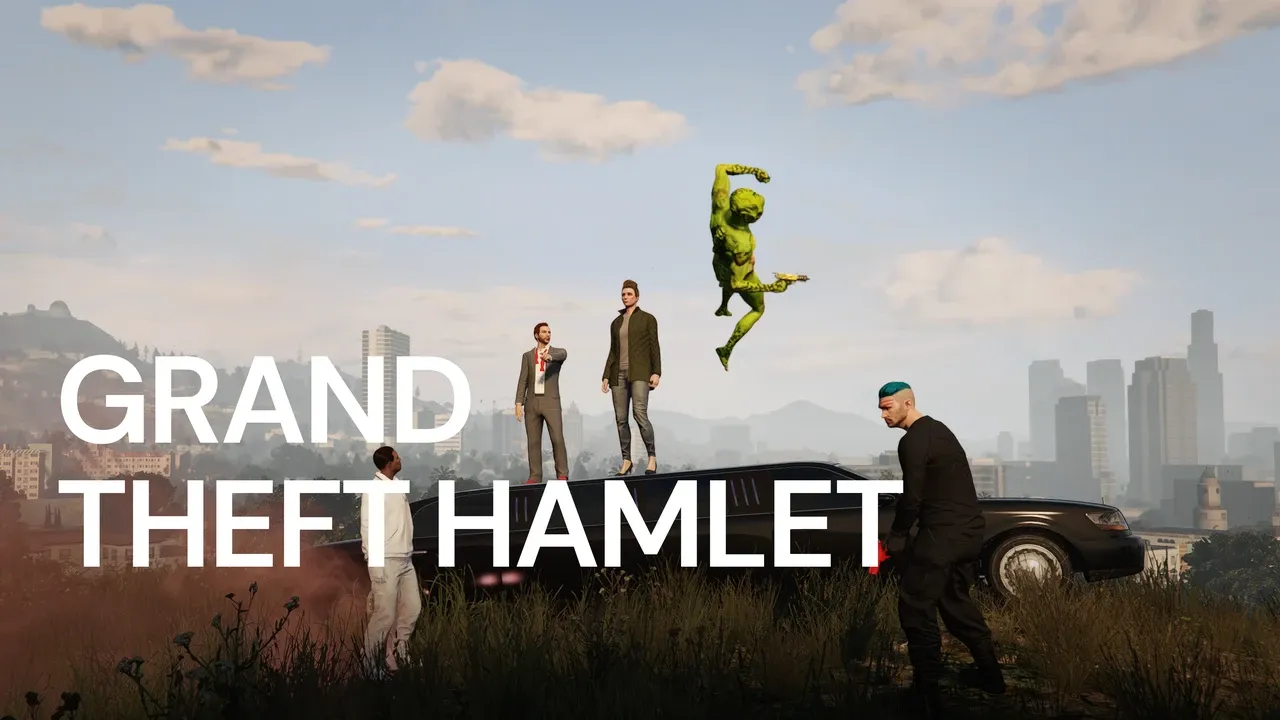
What if I told you "Hamnet" was not my favorite adaption of Shakespeare's iconic sonnet that I'd seen in 2025? This movie is an achievement in minimalistic filmmaking and I was in awe of its ability to reach the emotional heights that it does, through the medium of Grand Theft Auto. Although this was one of the first movies I logged in 2025, I found myself constantly thinking back to it throughout the year.
The movie follows a group of gamers that attempt to stage a performance of Hamlet within the Grand Theft Auto universe. What sounds initially like a punk rock / "fuck you" response to people too sentimental and rigid on what artistic expression ought to be these days, this picture hits some surprisingly emotive beats as it attempts to peel back the layers on how human connection can be established in this digital age, even in the face of extreme social isolation.
One of the great thrills in life is discovering new pieces of art that inspire us. It is especially satisfying when this happens serendipitously when flicking around for something to watch on a weeknight. That was my experience watching this for the first time and I encourage others to go in unsullied for maximum impact.
For me, its the Director's (Pinny Grylls, Sam Crane) ability to gradually draw you in first as a pseudo-documentary, then as a drama until it ultimately becomes this deeply personal lament on the social and mental challenges of life during the pandemic was truly captivated my mind and had me coming back to this story all year.
Where to Watch: Mubi
Compare and Contrast With: Hamnet.
#5 Marty Supreme
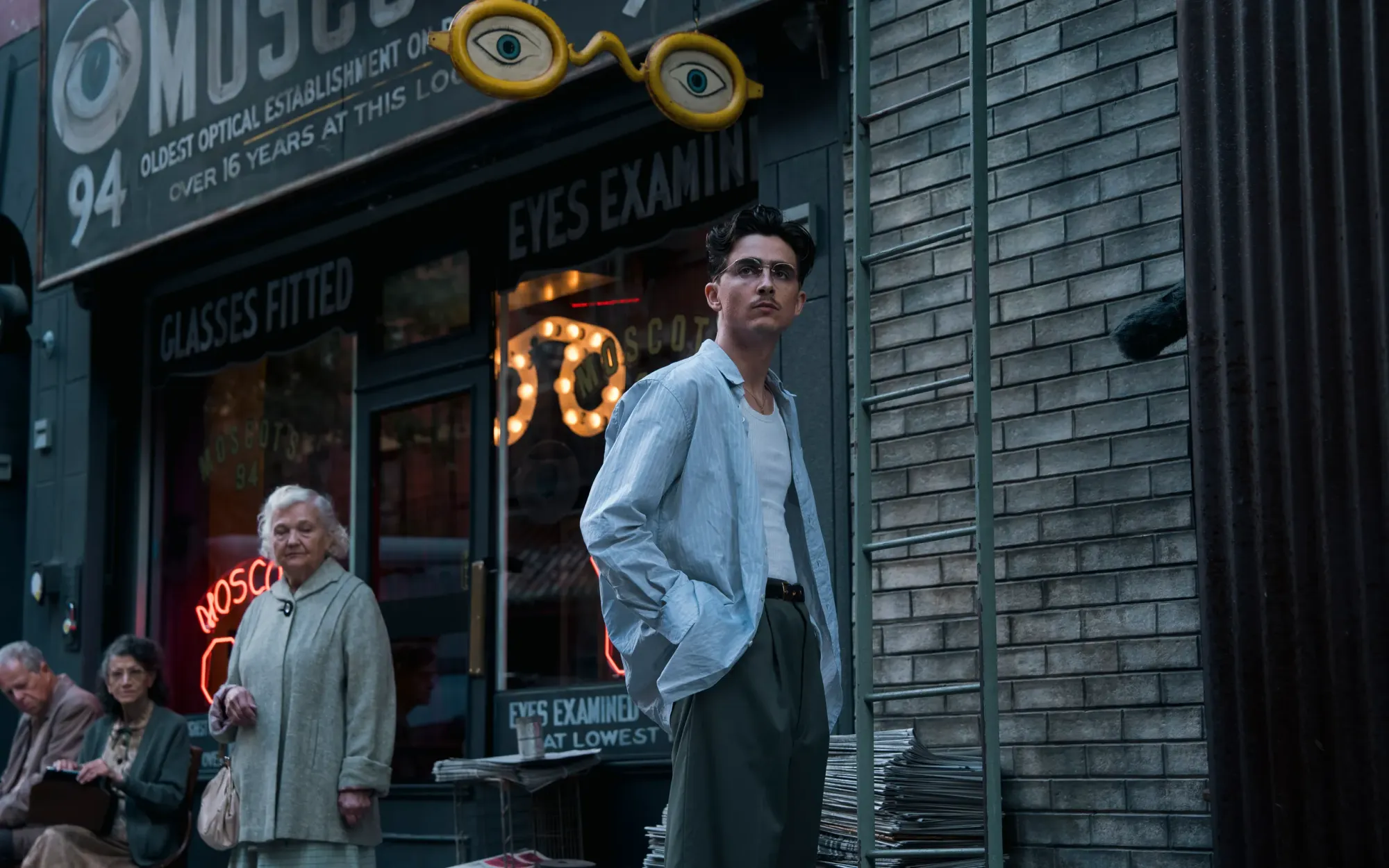
Marty Supreme follows the story of the swaggering up and coming table tennis athlete Marty Meuser, (Timothy Chamelet). For anybody familiar with Josh Safdie's game this movie matches the energy of predecessors such as Good Time or Uncut Gems with its frenetic pacing and imposing score propelling the movie forward from the jump.
From the get-go, we're introduced to a Chamalet with the bravado turned up to a thousand as he courts Hollywood harlot Kay Stone, (Gwenyth Paltrow). When he's not slick-talking media magnates he's sitting in corporate meetings having self-styled promotional products pitched to him. Even when he's losing, Chamalet plays it convincingly, portraying the arrogant persistence it takes to pursue an athletic career at that level, while also conveying an enduring vulnerability that elevates the typically one-dimensional sports biopic to something more.
For the leaps that I feel this movie takes to not be a "paint-by-the-numbers" sports biopic I do respect the swing. How it makes the audience reckon with the actions of its main protagonist is one aspect that I'm still debating whether the director lands. Marty isn't your straightforward underdog that we're constantly rooting for to defeat the seemingly unconquerable adversary, and Chamalet plays that down the middle beautifully.
Where to Watch: Video on Demand
Compare and Contrast With: Check out this clip from a recent interview with Safdie and filmmaker Sean Baker (of recent Anora notoriety) discussing an alternate ending that I honestly think would have leveled up the movie into a whole other tier for me.
#4 No Other Choice
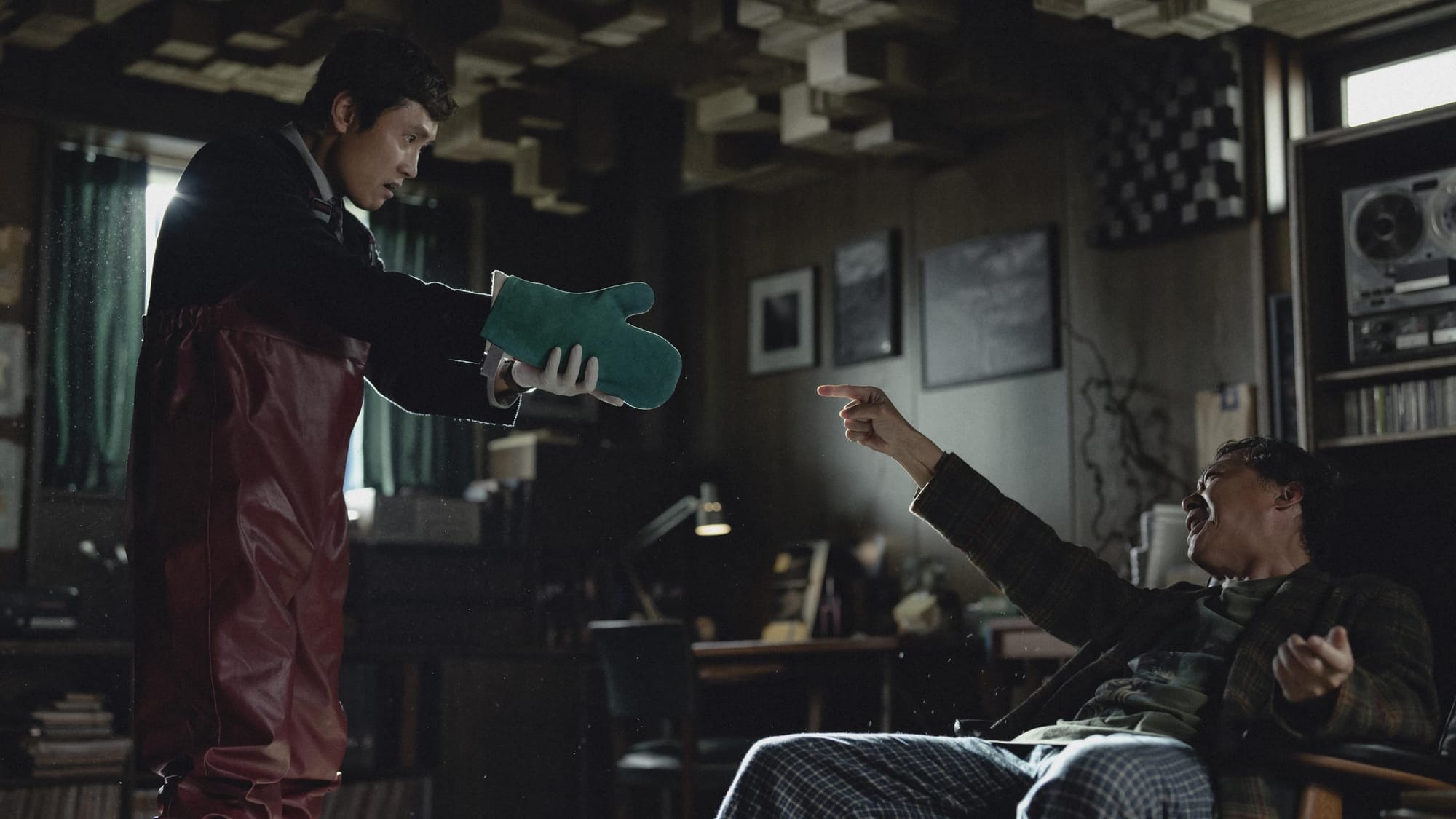
South Korean filmmaker Park Chan-wook of Oldboy fame is back with his latest tale provoking us to question the very nature of our existence in "No Other Choice". NOC plays on some of the most visceral, social issues facing the broader human race today: the displacement of workers via technology and corporate greed. In this fable, Park Chan-wook portrays the story of middle-aged, self-styled "Pulp Man of the Year", Yoo Man-soo. The movie plays as a sprawling dark comedic-thriller taking us through the decisions that Man-soo is "forced" to make in the face of unemployment, to sometimes mortal ends.
The film expectedly delights throughout with typical Park Chan-wook flourishes with inventive action sequences sandwiched between scenes of tense drama and dark humor. For me, the thing that kicks this movie into another gear is what it has to say about the human relationship to labor. More specifically, what the separation from labor can drive one to do. Man-soo moves throughout the movie as an individual who takes deep meaning and pride in his previous position as a "Pulp Man" . Despite attempts at intervention from his loved ones and other alternatives presenting themselves, Man-soo acts as if there is "No Other Choice" but to methodically plan out a path of vengeance against his fellow blue-collar, unemployed comrades. In experiencing this man's journey, one cannot help to take an introspective pulse on their own professional lives and wonder if there are similar sacrifices being made that can separate us from our humanity.
As someone having went through recent bumps in my own career, this was definitely a "right place, right time" movie for me, made all the more alluring by the beautiful tapestry stitched by Park Chan-wook to tell his epic.
Where to Watch: Video on Demand / Netflix (South Korea supposedly)
Compare and Contrast With: Marty Supreme. Strangely I feel like this movie works as an interesting double feature with "Marty Supreme". Many times I found myself watching both and comparing the arc of the main protagonists from each.
#3 Bugonia
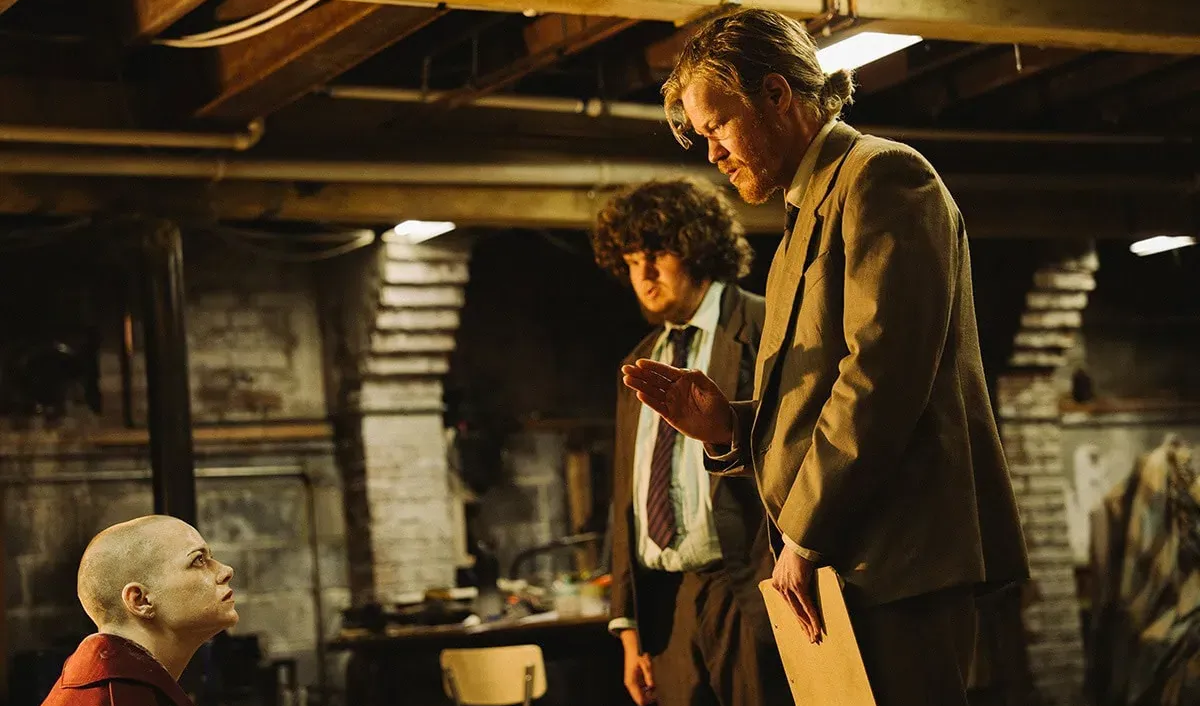
This time, Yorgos takes us into the world of Teddy and Don, two familial beekeepers turned Q-Anon conspiracists who plan to abduct the CEO of a big-Pharma conglomerate, Michelle Fuller (Emma Stone).
While at its surface, this picture can be taken for another quirky Yorgos-Stone mystery box story, its how Yorgos contrasts the plight of the bees with our own plight as a civilization throughout that really made this reach the next level for me.
The Dinner Scene unlocked this idea for me. Here we get Teddy and Michelle discussing Bees as a species and debating what has caused their recent “perils”. Here we see Michelle chained to a chair against her will but it is Teddy who we’re urged to feel sympathy for due to the callousness of Michelle’s prognosis. In defense of the accusation that her companies’ pesticide manufacturing may be complicit in this ecological disaster, she flippantly negates this charge by summizing: some species simply “wind down”.
Perhaps this is a commentary on how CEO billionaires today have the means to drive our society to extinction by destroying the livelihoods of the working class, the environment etc. We see that Teddy has compassion for the smallest of living creatures that the Michelle cannot seem to fathom.
This setup leaves the audience constantly coming back to the core question on whether Teddy is nothing more than a murderous, conspiracy theorist or a misunderstood hero whom traumatized as he may be, is ultimately the symbol of truth and good in this fable.
Where to Watch: Peacock
Compare and Contrast With: Bugonia is an English-language remake of South Korean cult classic film: "Save the Green Planet!" which I have not seen but have added to my watchlist.
#2 Sinners
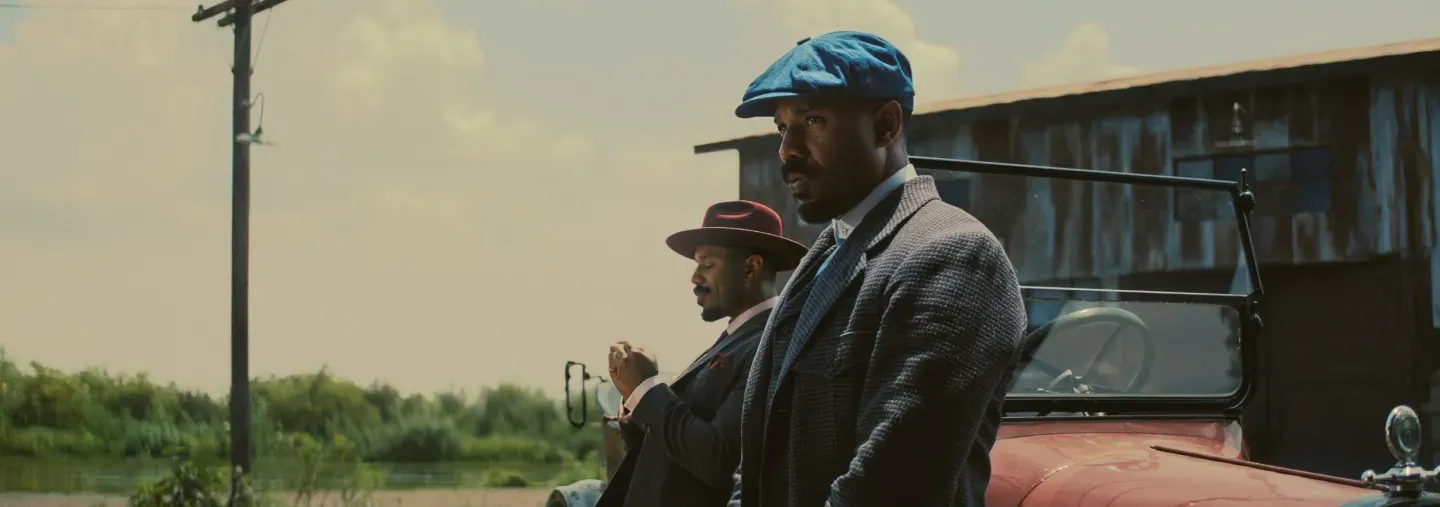
Sinners is a marauding, expansive insight into a specific time and place in American history, the Jim Crow-era South. What opens up as a "day-in-the life" tale of twin brothers "Smoke" and "Stack" (Micheal B. Jordan) grand opening of a 'juke joint' spot with their nephew, Sammy "Preacher Boy" (Miles Caton) develops into an epic genre-bending mix of period drama, horror, civil rights, musical and dramatic mastery with the generational filmmaker, Ryan Coogler at the helm.
While the technical prowess of this movie has been highly publicized (see https://www.youtube.com/watch?v=78Ru62uFM0s) its rich sense of responsibility to the stories of people whose stories have been lost in time is palpable throughout. In this story these characters are raised to the forefront whether it be the beautiful portrayal of Delta Slim (Delroy Lindo), an archetype of the poor black laborers of the Mississippi Delta and the creators of what we know as as the "Blues" today, or of Bo and Grace Chow, a married Chinese immigrants couple who run a local grocery store, portraying a history of Asian immigration and assimilation in the South not commonly seen on screen.
Both musically and through his portrayal of "preacher boy" musician, Sammy (Miles Caton) is our passage and guide through a time forgotten in American history and serves as the heart of the movie.
Delroy Lindo's Academy award-nominated performance as Virginia Slim balances the swaggering wit of a blues veteran while also striking some of the most emotive chords of the year, not least of all, when relaying a chilling tale of an ill-fated show where his brother was struck down and robbed for his performance money at the hands of a group of Klan members.
Having seen the picture in Lincoln Square iMax, it is fair to call this one of the most beautiful looking and sounding movies of the year. Miles Canton in his feature debut and as the heart of this blockbuster, is transcendent.
I did want to give a final shout out to Buddy Guy, who by Coogler's accounts, is the true-life Blues icon that Sammy's character is based on. He also makes a cameo in the post-credits scene of the movie. I recently got the opportunity to witness a live performance by Buddy at his namesake, "Legends" bar in Chicago. It was one of the single best live music experiences of my life and I thank Ryan Coogler for paying homage to the story of Buddy Guy's life on the silver screen.
Where to Watch: HBO Max
Compare and Contrast With: From Dusk till Dawn
#1 One Battle After Another
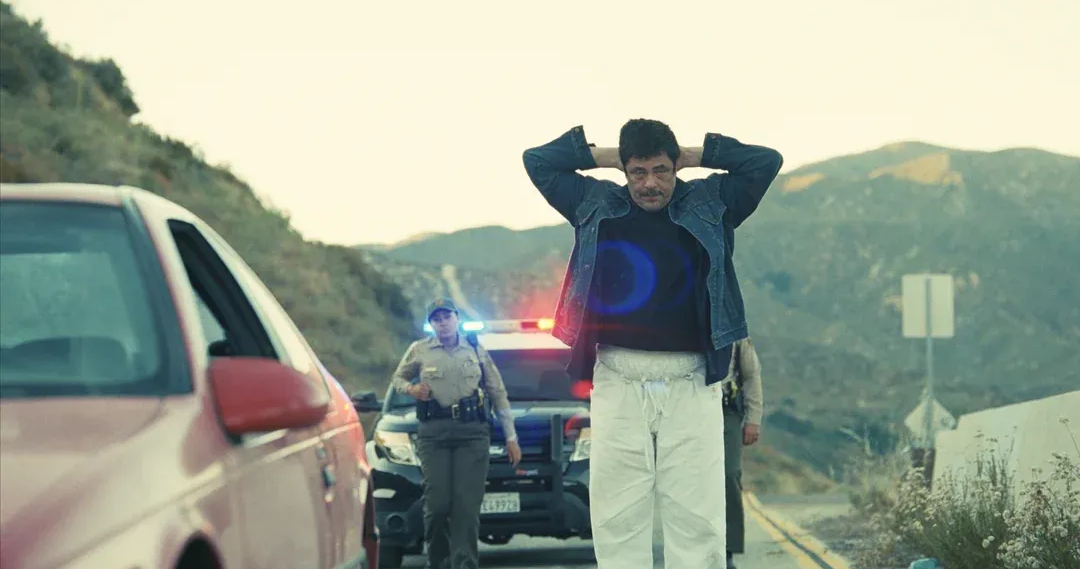
For my final entry, I wanted to talk about One Battle After Another, by Paul Thomas Anderson. This picture hits on all cylinders throughout and for a movie with an almost 3-hour runtime, I never felt the length despite numerous rewatches.
The story follows Bob and Willa Ferguson whom after Bob's past involvement with the revolutionary group the "French 75", are being hunted by a Gestapo-like immigration Czar known as Colonel Lockjaw (Sean Penn). It is a true ensemble cast with Teyana Taylor and Benicio Del Toro rounding it out, in addition to debutant Chase Infiniti. One of the high points of the movie for me are in the inspired, yet short cameos of the "supporting" characters specifically Benicio as Sensei and Regina Hall as Deandra. While both get relatively little screentime, their performances stand out as striking portrayals of everyday heroes caught amongst the crossfire of a totalitarian regime. Benecio's steals every scene that he's in, and given he is facing off against Leonardo DeCaprio in the majority of his scenes, this is no small accolade.
Earlier in 2025, having been self-admittedly unfamiliar with the extent off PTA's game I set out on a task to cover his filmography in preparation for this one. Despite not getting to see everything, I was able to catch Boogie Nights, Magnolia, Punch-Drunk-Love in addition to having already seen There Will Be Blood and Licorice Pizza. While many of these works deal with the theme of "found family" (as does OBAA), in my opinion, this is the most "political" of PTA's work to date and in that space, he is able to pose existential questions that examine not just the nature of humans but the nature of us as a society.
Of the most prescient of PTA's examinations, is the way in which political and government resources are deployed on a whim for personal gain. In his portrayal of Colonel Lockjaw, Sean Penn delivers a brooding, physical performance of a military commander devoid of a moral compass. Time and time again we see Lockjaw's objectionable values on full display, at times with something as harmless as exercising due diligence during the purchase of a jet-ski. Tellingly, when Lockjaw catches Perfidia "red handed", we see that even his basic duty to the safety of civilians is nothing more than a bargaining chip for his pursuit of sexual dominance - something we later learn is a threat to his very existence. Once we see Lockjaw readily cast his "morals" to the side for sex, we understand his character not just as a stand-in for Fascism, but as a dangerous tyrant who as his "power" increases throughout the movie, becomes only more emboldened to wield it more irresponsibly. Certainly something we're all too familiar with in this day and age.
I was recently listening to a podcast where the host shared that they've started to think about movie through the lens of "What did the hero of the story have to sacrifice?". Bob and Perfidia's sacrifices are almost mirrors of one another in this film. In Perfidia we see a woman who has been born to a family lineage of revolutionaries, and early on, Bob is warned by her family that the lifestyle he envisages with her may not be attainable. Ultimately, the cause of continuing the revolution becomes the sacrifice that sends both characters off on separate paths. While the audience can decide to agree or disagree with the decisions both character chooses, PTA uses this fork in their paths to mine insights about the price of fulfilling what we believe to be our own "purpose".
One final aspect of the movie that I did want to comment on whether it portrays a problematic representation of black women as mothers, specifically the character of Perfidia Beverly Hills. In my opinion, Teeyana does an excellent job of playing a flawed character but one that is ultimately redeemed by the most important person in her life, her daughter, by the end of the movie. Perfidia is portrayed as a complicated protagonist who feels destined to be a revolutionary and is willing to put the rest of her life on hold to carry out her acts of defiance. To me, it an oversimplification to critique PTA's portrayal of Perfidia's as a neglectful mother but as a complicated but deeply loving Mother caught up in a time demanding the skills of a revolutionary.
Where to Watch: HBO Max
Compare and Contrast With: OBAA is a loose adaption of Thomas Pynchon’s 1990 novel Vineland.
For ongoing reviews and opinions on what I've been watching feel free to follow my Letterboxd account @Lynchda1